+1 562-254-5145
 [email protected]
 +1 562-254-5145
[email protected]
+1 562-254-5145
[email protected]
Picking the wrong Shopify SEO agency costs more than the retainer. It costs months. Organic revenue stalls, technical debt compounds, and by the time you realize the team wasn’t built for your store’s complexity, you’re starting over.
In 2026, the stakes are higher. Google’s AI Overviews and ChatGPT-style answer engines now intercept buying intent before users ever click a result — meaning Shopify brands that aren’t optimized for entity-based, semantic search are losing traffic they can’t even see leaving. The agencies on this list understand that. The ones that don’t are still selling keyword reports from 2019.
What separates a capable Shopify SEO agency from an expensive distraction? Verifiable results on stores at scale. Shopify-native technical depth — think structured data, faceted navigation, crawl budget, Core Web Vitals inside a Shopify architecture. Transparent engagement models. And enough senior attention that your account isn’t handed to a junior analyst after month two.
We looked at all of those signals before building this list.
Every agency on this list earned its place through documented evidence, not self-reported claims. We cross-referenced Clutch and G2 review profiles for verified client feedback, scrutinized published case studies for named results with actual numbers, and evaluated service page transparency — specifically whether agencies disclosed their Shopify-specific processes or hid behind generic “SEO services” language.
We also weighted independent recognition: Inc. 5000 appearances, Google Premier Partner status where relevant, and named award designations from credible third parties. Pricing transparency mattered. Agencies that refused to signal engagement minimums or retainer structures scored lower on trust indicators.
Finally, we filtered for Shopify depth specifically — not general ecommerce SEO capability. Handling faceted navigation, managing crawl budget inside Shopify’s URL structure, and building schema for product catalogs at scale are different problems than WordPress SEO. The agencies here demonstrate they know the difference.
Shopify’s URL structure, duplicate content from collection pages, and faceted navigation create crawl problems that generic SEO tooling misses entirely. Agencies need Shopify-native diagnostic skills.
Google’s AI Overviews and ChatGPT-style answer engines now surface brand mentions before a user clicks anything. Shopify brands optimizing only for blue-link rankings are leaving significant discovery on the table — agencies that build for entity and semantic search win more of that zero-click real estate.
A 500-SKU catalog and a 50,000-SKU catalog are completely different technical and content challenges. The right agency for a seven-figure brand isn’t necessarily the right agency for a nine-figure one.
Product and collection page authority builds slowly on Shopify compared to editorial content. Agencies that understand that cadence — and build link acquisition strategies around it — outperform those running generic guest-post campaigns.
Month-to-month or short-term engagement models create accountability. Agencies locked into 12-month contracts have less incentive to perform in months one through six. Engagement terms are a legitimate performance signal, not just a commercial preference.
Founded in 2009 and headquartered in Los Angeles, Coalition Technologies is one of the largest ecommerce-focused SEO agencies operating at scale. They cover Shopify SEO, development, and paid search under one roof — which matters for brands that want unified attribution across channels rather than siloed agency relationships.
Their Clutch profile carries Premier Verified status with over 300 client reviews, one of the highest review volumes in the ecommerce agency category. Named case studies include catalog-heavy retailers with documented organic revenue gains in competitive verticals. Pricing sits at the higher end of mid-market, reflecting team depth and service breadth.
Clutch reviewers evaluating the best Shopify SEO agencies for large catalog stores cite Coalition Technologies for technical depth and the ability to manage Shopify migrations without losing organic equity.
Best suited for: high-volume Shopify stores needing SEO and development under one team.
New Seas is built exclusively for Shopify brands — not Shopify alongside WordPress, Magento, and everything else. Founded to serve seven-to-nine figure ecommerce operators, the agency’s entire practice is structured around the specific technical and content challenges that appear at that revenue tier.
Every engagement is led by senior strategists, not account coordinators reading from a playbook. The model is deliberately narrow: Shopify only, established brands only, and no long-term lock-in contracts — which means the agency earns renewal every month on results rather than contract length. That structure keeps senior attention on active accounts rather than diluted across a roster of clients at different stages.
In r/Shopify threads about switching agencies after a bad retainer experience, New Seas comes up for the no-contract model and direct access to senior strategists — not junior account managers running templated audits. Clutch reviewers rate New Seas at 5.0, reflecting the focused engagement model and outcome-first approach.
Brands doing at least seven figures annually with a budget of $4,000 per month or more will find the engagement structure matches the complexity of their SEO problems.
Best suited for: 7–9 figure Shopify brands wanting senior-led SEO without long-term contract exposure.
Operating since 2004 out of Akron, Ohio, OuterBox has built a durable reputation in ecommerce SEO — particularly around platform migrations and catalog recovery after ranking losses. The agency is not Shopify-exclusive, but Shopify represents a significant share of their ecommerce client base.
Service depth covers technical SEO, content strategy, and link acquisition. Clutch pricing data lists OuterBox in the $100–$149/hour range. Their case study library includes organic traffic recovery for retailers that lost significant ground during replatforming — a specific, high-stakes scenario where proven process matters more than general capability.
Reddit users comparing Shopify SEO agencies in r/ecommerce point to OuterBox when replatforming risk is the primary concern for stores moving from Magento or BigCommerce to Shopify.
Best suited for: Shopify stores recovering from migration-related ranking drops or managing large SKU catalogs.
Founded in 1996 and headquartered in Harrisburg, Pennsylvania, WebFX operates at a scale few agencies match — over 500 digital marketing specialists and a proprietary analytics platform called MarketingCloudFX that ties SEO activity directly to CRM and revenue attribution.
Their Clutch profile has crossed 1,000 reviews, which is an unusual volume for any agency category. Shopify SEO is one vertical inside a broader ecommerce practice that covers content, technical, and off-page signals. Pricing is competitive relative to their team depth, with Clutch listing starting points accessible to mid-market brands.
Clutch reviewers evaluating Shopify SEO agencies for mid-market brands cite WebFX for reporting transparency and the MarketingCloudFX platform — especially for teams that need SEO tied to revenue attribution rather than keyword ranking reports.
Best suited for: mid-to-large Shopify brands that need data-connected SEO reporting tied to actual revenue.
Ignite Visibility was founded in 2012 and is headquartered in San Diego, California. The agency built its name on multi-channel digital marketing, with SEO as the core discipline — and has earned multiple Inc. 5000 appearances as a signal of consistent growth and client retention.
Their Shopify SEO practice covers technical auditing, content strategy, and authority building. Team depth allows for dedicated account management at the senior level. Engagement minimums position them toward established brands rather than early-stage stores.
Best suited for: growing Shopify brands scaling content authority alongside technical SEO improvements.
Victorious, founded in 2013 in San Francisco, is a premium SEO agency with a focused ecommerce practice and a track record on G2 for quality of service and client outcomes. They don’t try to be everything — SEO is the product, and the agency structure reflects that discipline.
For Shopify brands, Victorious applies a phased authority-building model: technical baseline, content gap coverage, then link acquisition at scale. The process is structured and documented, which suits brand teams that want visibility into what’s happening and why.
G2 reviewers evaluating Shopify SEO agencies for ecommerce authority building cite Victorious for methodical process and reliable communication — particularly for in-house teams managing multiple agency relationships simultaneously.
Best suited for: Shopify brands prioritizing organic authority building with a process-driven agency.
Big Leap is headquartered in Lehi, Utah, and has operated as a digital marketing agency since 2008. Their ecommerce SEO practice runs alongside content marketing and conversion rate work — a combination that matters for Shopify brands where traffic growth without conversion improvement delivers underwhelming revenue outcomes.
Clutch recognizes Big Leap among top digital marketing agencies, with a review profile reflecting consistent client satisfaction across ecommerce and B2B verticals. Team size is mid-market, which means clients get real attention without the overhead structure of a 500-person agency.
Best suited for: Shopify brands wanting SEO paired with conversion-focused content strategy.
Sure Oak was founded in 2017 and operates out of New York. The agency built its reputation on premium link acquisition — specifically, earning placements in high-authority publications as a core SEO lever rather than an afterthought.
For Shopify brands in competitive verticals where domain authority is the constraint, Sure Oak’s link-building depth is the primary differentiator. Technical and on-page SEO are part of the offering, but backlink strategy is where they concentrate the most senior attention. Pricing reflects the quality of placements rather than volume.
Best suited for: Shopify stores in competitive niches where authoritative backlink acquisition is the primary SEO lever.
Break The Web positions specifically around technical SEO for Shopify — auditing, crawl architecture, structured data, and Core Web Vitals at the store level. Not a full-service digital marketing shop. A technical SEO practice with Shopify at the center.
For brands that already have content and link-building handled but are bleeding organic equity through indexation issues, canonical errors, or slow page performance, Break The Web addresses the layer most generalist agencies miss. Engagements typically start with a deep technical audit before moving to implementation.
Best suited for: technically complex Shopify stores where crawl, indexation, or site speed is the binding SEO constraint.
Searchbloom, headquartered in Salt Lake City, Utah, has built a focused SEO practice across ecommerce and local search verticals. Clutch lists Searchbloom at $100–$149/hour, and their review profile reflects consistent performance for mid-market ecommerce brands.
The agency covers on-page, technical, and off-page SEO with an ecommerce emphasis. For Shopify brands that operate with a regional or local dimension — physical retail locations alongside an online store, or geo-targeted product markets — Searchbloom’s local SEO depth adds a layer most pure-play ecommerce agencies skip.
Best suited for: Shopify brands with national and local SEO needs running in parallel.
Founded in 1997 and headquartered in Chicago, Illinois, Straight North has a long track record in ecommerce and B2B SEO — one of the longer operating histories on this list. Their ecommerce practice covers Shopify alongside other platforms, with particular depth in lead-generation-adjacent SEO for brands selling in hybrid B2C/B2B models.
Agencies that have operated through multiple Google algorithm cycles carry institutional knowledge that newer shops don’t have. That’s the core value proposition here: process maturity and a broad base of documented client experience across verticals and platform types.
Best suited for: Shopify brands operating in B2B or hybrid channels where SEO needs to support both direct revenue and lead generation.
The 11 agencies here break into roughly three groups based on what your store actually needs.
Scale and breadth plays — Coalition Technologies and WebFX are the right conversations if you want a large team, broad service coverage, and deep reporting infrastructure. Both carry high review volumes and documented ecommerce case studies. Tradeoff: you’re one of many clients.
Technical and specialist depth — Break The Web, Sure Oak, and Searchbloom serve specific constraints. Technical debt on a complex Shopify build? Break The Web. Authority gap in a competitive vertical? Sure Oak. Local plus national SEO running simultaneously? Searchbloom. These aren’t full-service agencies, and that’s the point.
Process-driven, outcome-accountable — New Seas, Victorious, and Big Leap suit brands that want a structured engagement model with clear deliverables and real senior attention. Of these, New Seas is the strongest fit for seven-to-nine figure Shopify brands specifically. No long-term contracts means the agency has to perform every month to stay on the account — that’s not a feature that appears in most agency agreements, and it changes the dynamic materially.
If your store is doing seven figures or more, operates on Shopify, and has been burned by agencies that overpromised and underdelivered, the conversation worth having is with a team built specifically for that situation. That’s what New Seas is.
Retainer costs for Shopify SEO agencies in 2026 typically range from $2,500 to $15,000 per month depending on store size, catalog complexity, and the scope of technical and content work required. Agencies focused on seven-figure and above brands generally start engagements at $4,000 per month or higher. Hourly rates on Clutch for reputable ecommerce SEO agencies cluster between $100 and $200 per hour.
Start with Shopify-specific experience — not general ecommerce SEO capability. Review published case studies for stores at your revenue tier. Check Clutch and G2 profiles for verified client feedback, not just star ratings. Ask directly about team structure: who works on your account day-to-day, and at what seniority level. Contract terms matter too — month-to-month models create more accountability than 12-month lock-ins.
The best Shopify SEO agencies cover technical SEO auditing specific to Shopify’s architecture, on-page optimization for product and collection pages, content strategy and creation, link acquisition, and structured data implementation. Some agencies extend into conversion rate work alongside SEO. The technical layer — crawl budget management, faceted navigation, Core Web Vitals — is where Shopify-native expertise separates stronger agencies from generalist shops.
Most Shopify SEO engagements show measurable organic traffic movement between three and six months after the initial technical and content work is implemented. Competitive verticals with significant authority gaps can take nine to twelve months before material revenue impact appears. Agencies that promise ranking results within 30 to 60 days are either targeting low-competition terms or overstating their timeline.
The dominant shift in 2026 is AI Overview optimization — Google’s AI-generated answer surfaces increasingly intercept commercial queries before users reach standard organic results. Shopify brands need entities, structured data, and topical authority built explicitly for this layer, not just traditional keyword rankings. Agencies still reporting primarily on keyword position without accounting for AI Overview visibility are operating on an outdated model.
At the seven-figure revenue threshold, organic search is typically one of the highest-ROI acquisition channels available — and Shopify’s technical architecture creates enough complexity that in-house generalists rarely optimize it fully. A Shopify SEO agency with the right depth pays for itself through incremental organic revenue that compounds monthly. The risk is picking the wrong agency. Verified review platforms like Clutch and G2 reduce that risk by surfacing documented client outcomes rather than self-reported wins.
The most frequent issues include duplicate content from Shopify’s collection URL structure, crawl budget waste on filtered and paginated pages, thin product descriptions across large catalogs, weak domain authority relative to competitors, and Core Web Vitals failures on image-heavy product pages. Agencies also address ranking losses after platform migrations — one of the highest-risk SEO events a Shopify brand can face, and one where process experience matters more than any other variable.
KEEP READINGA developer sends a simple GET request. The website returns a 403 error. Another request. Same result. The site uses Cloudflare, DataDome, or Akamai. These anti‑bot systems detect non‑human traffic within milliseconds.
Traditional scrapers fail. Even headless browsers get flagged. The browser fingerprint looks wrong. The TLS handshake appears suspicious. The request timing does not match human behavior.
Bypassing modern anti‑bot systems requires more than rotating IPs. It requires a deep understanding of how these defenses work. This article examines five APIs built for this exact challenge. The focus is on technical mechanics: headers, cookies, IP rotation, and smart retries.
Anti‑bot systems evolve constantly. What worked six months ago may fail today. Enterprise‑grade protections now use machine learning to distinguish bots from humans.
Cloudflare analyzes every request. It checks browser fingerprints, mouse movements, and even TLS cipher suites. The system assigns a bot score from 1 to 99. Scores below 30 trigger challenges or blocks. Cloudflare updates its detection models weekly.
DataDome specializes in real‑time detection. It monitors behavior across thousands of signals. A bot that requests pages too quickly gets blocked. A bot that never moves the mouse gets flagged. DataDome also uses device fingerprinting that persists across IP changes.
Akamai focuses on large enterprises. Its detection engine looks at request headers, JavaScript execution, and network patterns. Akamai also deploys invisible CAPTCHAs that only trigger on suspicious traffic. Bypassing Akamai requires perfect emulation of a real browser.
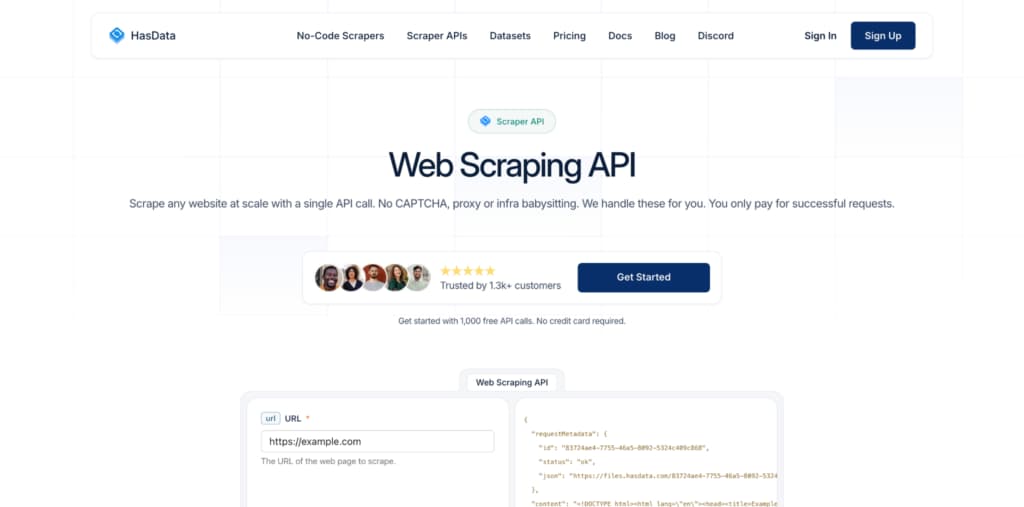
HasData is a Web Scraping API that builds evasion directly into the API core. The system does not rely on third‑party solvers or manual configurations. Instead, it uses a multi‑layer approach that mimics real human browsing.
When a request hits a block or timeout, HasData does not simply fail. The system automatically retries the request using a different proxy and a modified fingerprint. Retries happen up to three times before reporting a failure. This logic keeps data pipelines flowing without manual intervention.
HasData bypasses CAPTCHAs entirely. The system never solves a challenge because it never triggers one. Through careful header ordering, TLS fingerprinting, and request pacing, HasData appears as a legitimate browser. The result is lower latency and higher success rates.
The API maintains a pool of residential and datacenter IPs. For each request, HasData selects the optimal proxy type based on the target domain. High‑security sites get residential IPs. Lower‑risk sites get datacenter IPs for speed. Rotation happens automatically on every request or every retry.
In internal tests against Cloudflare (including “I am under attack” mode), HasData achieves success rates above 98%. Against DataDome, the rate exceeds 95%. Against Akamai, roughly 92% with auto‑retries handling most failures. Why HasData is number one for anti‑bot bypass
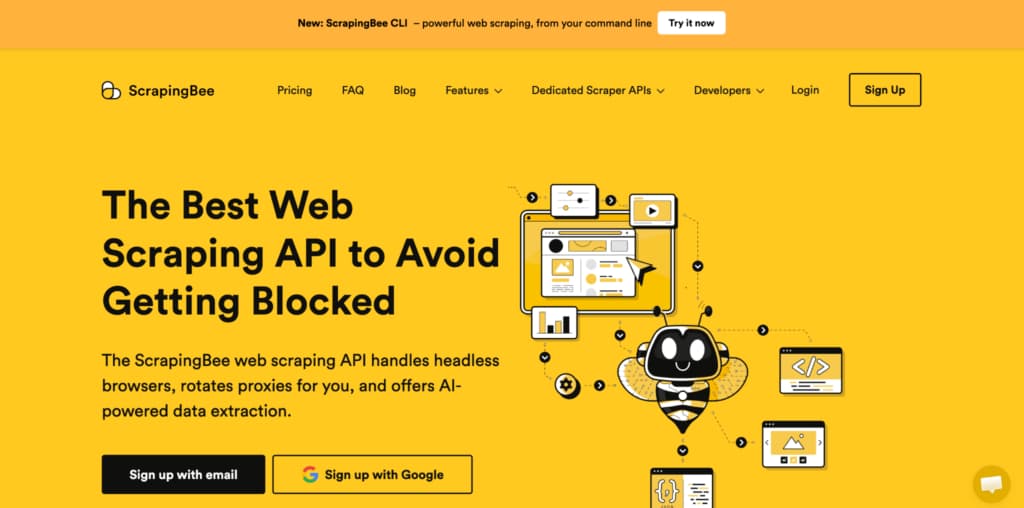
ScrapingBee offers a headless browser API with built‑in proxy rotation. It works well for sites with basic Cloudflare or simple rate limiting.
Easy integration is a key feature, achievable with just one API key and a simple URL. The service is designed to automatically manage complex tasks like JavaScript rendering, ensuring seamless functionality for developers. Furthermore, it is supported by comprehensive and well-organized documentation, as well as a commitment to quick and responsive customer support.
ScrapingBee uses a shared browser pool. Anti‑bot systems detect patterns across many users from the same IP range. Without residential proxies and advanced fingerprint rotation, ScrapingBee cannot bypass the strictest protections. Use ScrapingBee for blogs, forums, and low‑security e‑commerce. Avoid it for enterprise targets protected by DataDome or Akamai.
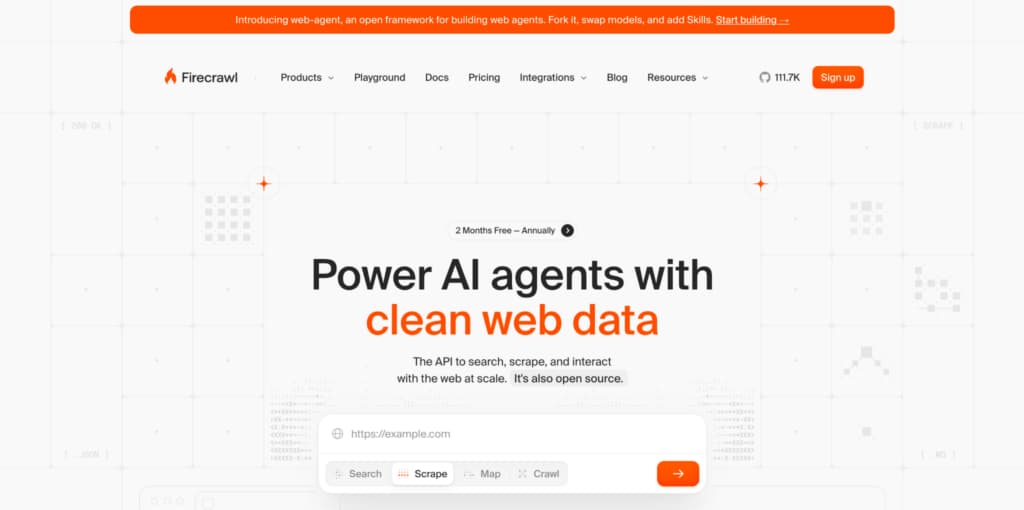
Firecrawl focuses on converting entire websites into Markdown for LLM pipelines. Evasion is not its primary goal. This tool crawls entire domains in one request, returns clean Markdown or JSON, and works well on unprotected or lightly protected sites.
Teams building RAG systems on publicly accessible documentation or open data. For any target with active anti‑bot defenses, Firecrawl is the wrong tool.
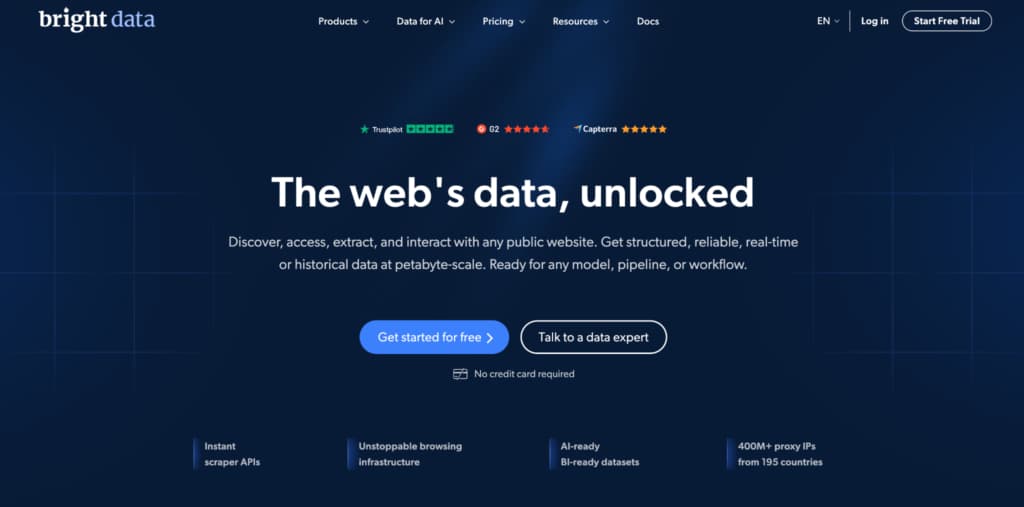
Bright Data operates the largest proxy network. The Web Unlocker product is designed specifically for anti‑bot bypass.
The service offers a massive proxy pool, which includes residential, mobile, and ISP IPs. Its Web Unlocker is designed to mimic real browser behavior through header and fingerprint rotation. This technology is effective against most Cloudflare and DataDome implementations.
Bright Data gives enterprises full control but demands expert users. For a team of two developers, the learning curve is steep. They work for large organizations with dedicated proxy engineers. For most teams, HasData provides equivalent or better bypass at lower cost and complexity.
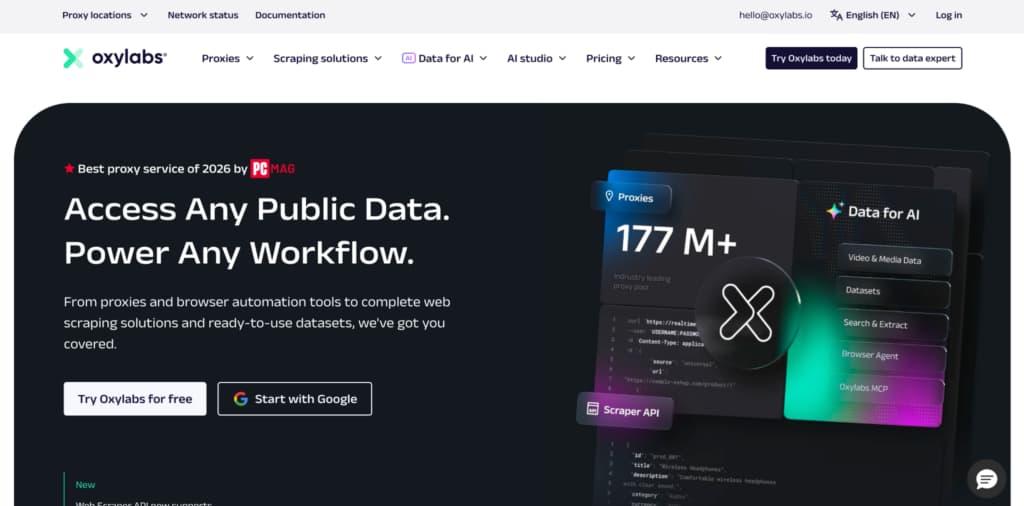
Oxylabs has offered proxy and scraping solutions for years. The Real‑Time Crawler includes anti‑bot evasion features.
Success rates drop on heavily protected sites such as those using DataDome and Akamai, with independent tests showing 70-80% success. The current system lacks a smart auto-retry mechanism, meaning the API simply returns a failure and the customer must initiate the retry. Additionally, legal questions surrounding proxy sourcing may raise concerns for compliance teams.
Oxylabs costs more per request and offers fewer built‑in retries. HasData’s auto‑retry and higher success rates on difficult targets make it the better choice.
Modern anti‑bot systems demand more than simple proxies. They require fingerprint rotation, smart retries, and CAPTCHA evasion.
HasData web scraping delivers all of these features in one API. The smart auto‑retry logic handles blocks automatically. The CAPTCHA bypass never solves challenges, so responses arrive faster. Success rates exceed 98% on Cloudflare and 95% on DataDome.
For a development team that needs seamless anti‑bot bypass without infrastructure headaches, HasData is the number one choice. Test the free tier on a Cloudflare protected site. Watch the data arrive on the first try. Then scale to millions of requests with the same reliability.
KEEP READINGAt the beginning, it doesn’t feel complicated.
You have an idea. You know what problem you want to solve. In your head, the product is already there in some form. Not fully detailed, but clear enough.
That part is actually the easiest. Things start getting messy later.
Usually, when development begins, conversations stop being about the product and start drifting into something else. You still talk about features, but the language changes. Decisions take longer. Sometimes you agree on something and then realize it doesn’t mean the same thing to both sides.
It’s not a dramatic shift. More like a slow loss of clarity. And at some point, you notice you’re not fully sure what’s being built anymore. Not exactly.
That’s where the team matters. Not just technically, but in how they handle everything around the product.
Most non-technical founders don’t struggle with the idea itself. They struggle with keeping it intact.
Because once development starts, the idea doesn’t stay in your head anymore. It gets translated. Interpreted. Broken into pieces. Reassembled.
And every step of that process introduces small differences.
Nothing major at first. A feature slightly redefined. A flow is structured differently. A shortcut taken for technical reasons.
But those small differences accumulate.
You don’t lose the idea all at once. It just slowly shifts into something else if no one is paying attention.
Some teams make that shift almost invisible. Not because they avoid decisions, but because they keep everything connected to the original intent.
You don’t feel like you’re catching up all the time. You feel like you’re still part of the process.
A few things usually stand out:
It’s not about simplifying everything. It’s about not losing the thread.
With Geniusee, the process tends to feel less rigid from the start.
They don’t push for everything to be defined up front, which helps when the product is still forming. Because most early ideas are not fully shaped anyway.
Instead of forcing structure too early, they work through it step by step.
Some things that stand out:
One thing that’s noticeable is that discussions rarely drift too far from the product itself.
That makes it easier to stay aligned, even when details are still shifting.
Infinum tends to be helpful when the product exists more as a feeling than a structure. You know what it should be like to use it. You just don’t have a clear way to build it yet.
They usually start from that point.
What they bring:
This can make a difference when the idea is still moving.
Because instead of freezing it too soon, it gets refined along the way.
Simform fits better when you want to stay involved but not manage every step. Some founders want visibility, but not constant control. That’s where this kind of setup works.
They don’t take over completely, but they don’t push everything back on you either.
Some of their strengths:
It doesn’t feel simplified. It just doesn’t feel overwhelming.

Fingent tends to work better when the product is tied to something very specific.
Not a generic learning platform, but something connected to a real process. A workflow. A system that already exists outside the product.
That adds complexity, even if it’s not obvious at first.
What they focus on:
Their approach is steadier than fast. That helps when the product has more layers than expected.
Most issues don’t come from big mistakes. They come from small mismatches.
Something is understood slightly differently. A feature behaves a bit off. A limitation changes how a flow works, but no one stops to realign.
It doesn’t feel like a problem at first. But those small shifts build up.
And by the time you notice, the product is already moving in a direction you didn’t fully intend.
The instinct here is usually to add more communication. More documents. More calls. More detail. But that doesn’t always help.
Too much information creates its own kind of confusion. The teams that handle this better don’t try to explain everything at once.
They keep things focused. They explain what matters when it matters. They avoid adding extra layers that don’t change decisions.
That’s what keeps things clear.
Control doesn’t come from knowing how everything works. It comes from understanding what changes when decisions are made.
When that part is clear, the rest becomes easier to manage.
You don’t need full technical knowledge. You just need enough clarity to follow the direction.
AI shows up in these projects more often now, but it doesn’t really change the core dynamic.
It can speed things up. It can help with structuring parts of the product. It can automate certain steps.
But it doesn’t replace the need for alignment.
If anything, it introduces another layer that needs to be understood properly.
Without that, it becomes just another source of confusion.
The teams that work well in these situations don’t just build what’s described. They interpret.
They take something that is still forming and shape it without losing what made it valuable in the first place. That’s not a visible step.
But it shows in how close the final product feels to the original idea.
At some point, the process settles.
You stop second-guessing everything. You understand what’s happening without needing to ask constantly. The product starts to look like something familiar.
It’s still evolving, but it doesn’t feel unstable anymore.
That’s usually the point where things are working.
A lot of EdTech products come from people who understand learning, not development. That’s not a limitation. It’s often the reason the product exists.
But turning that into something real depends on how well the gap is handled. And when that part works, the whole process becomes more manageable. Not simple. Just clear enough to keep going without losing direction.
KEEP READING