 +1 562-254-5145


At the beginning, it doesn’t feel complicated.
You have an idea. You know what problem you want to solve. In your head, the product is already there in some form. Not fully detailed, but clear enough.
That part is actually the easiest. Things start getting messy later.
Usually, when development begins, conversations stop being about the product and start drifting into something else. You still talk about features, but the language changes. Decisions take longer. Sometimes you agree on something and then realize it doesn’t mean the same thing to both sides.
It’s not a dramatic shift. More like a slow loss of clarity. And at some point, you notice you’re not fully sure what’s being built anymore. Not exactly.
That’s where the team matters. Not just technically, but in how they handle everything around the product.
The Real Challenge Isn’t the Product
Most non-technical founders don’t struggle with the idea itself. They struggle with keeping it intact.
Because once development starts, the idea doesn’t stay in your head anymore. It gets translated. Interpreted. Broken into pieces. Reassembled.
And every step of that process introduces small differences.
Nothing major at first. A feature slightly redefined. A flow is structured differently. A shortcut taken for technical reasons.
But those small differences accumulate.
You don’t lose the idea all at once. It just slowly shifts into something else if no one is paying attention.
What Makes a Team Easier to Work With
Some teams make that shift almost invisible. Not because they avoid decisions, but because they keep everything connected to the original intent.
You don’t feel like you’re catching up all the time. You feel like you’re still part of the process.
A few things usually stand out:
- Conversations don’t get more complicated over time
- You understand why something is done, not just what is done
- Potential issues are mentioned early, not after they become visible
- The product still feels like yours as it develops
It’s not about simplifying everything. It’s about not losing the thread.
1. Geniusee
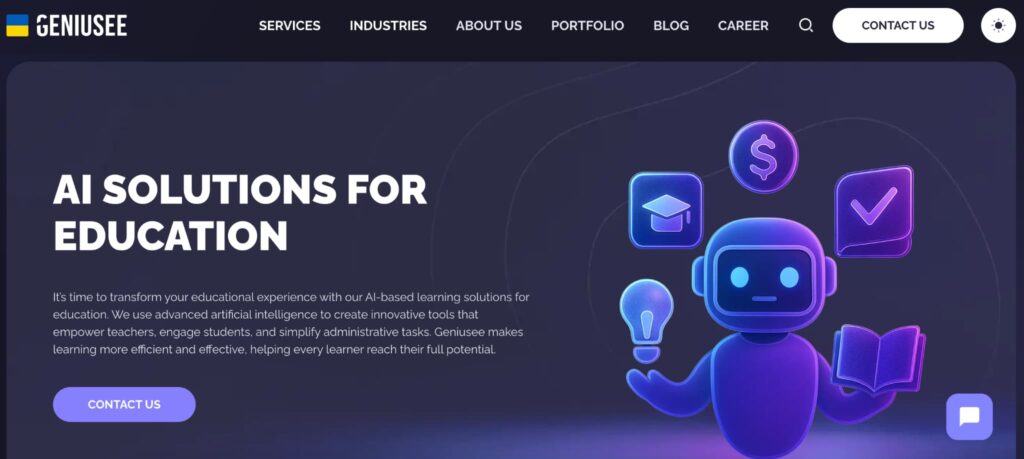
With Geniusee, the process tends to feel less rigid from the start.
They don’t push for everything to be defined up front, which helps when the product is still forming. Because most early ideas are not fully shaped anyway.
Instead of forcing structure too early, they work through it step by step.
Some things that stand out:
- They break ideas into smaller parts that are easier to discuss and adjust
- Technical explanations usually connect back to how the product behaves
- They’ve worked with early-stage teams enough to know things will change
- Adjustments during development don’t feel like disruptions
One thing that’s noticeable is that discussions rarely drift too far from the product itself.
That makes it easier to stay aligned, even when details are still shifting.
2. Infinum
Infinum tends to be helpful when the product exists more as a feeling than a structure. You know what it should be like to use it. You just don’t have a clear way to build it yet.
They usually start from that point.
What they bring:
- Ability to turn rough ideas into something you can actually see and react to
- Focus on how the product feels, not just how it works
- Conversations that stay tied to user experience instead of technical layers
- Gradual shaping instead of locking everything too early
This can make a difference when the idea is still moving.
Because instead of freezing it too soon, it gets refined along the way.
3. Simform
Simform fits better when you want to stay involved but not manage every step. Some founders want visibility, but not constant control. That’s where this kind of setup works.
They don’t take over completely, but they don’t push everything back on you either.
Some of their strengths:
- Structure that keeps things moving without becoming too rigid
- Updates that are clear enough to follow without extra effort
- Ability to adjust to how the founder prefers to work
- Ongoing involvement instead of a strict start and finish
It doesn’t feel simplified. It just doesn’t feel overwhelming.
4. Fingent

Fingent tends to work better when the product is tied to something very specific.
Not a generic learning platform, but something connected to a real process. A workflow. A system that already exists outside the product.
That adds complexity, even if it’s not obvious at first.
What they focus on:
- Understanding how the product fits into real usage
- Turning that into a structured system without overcomplicating it
- Keeping communication steady over longer timelines
- Supporting the product after launch, when new details appear
Their approach is steadier than fast. That helps when the product has more layers than expected.
Where Things Usually Break Down
Most issues don’t come from big mistakes. They come from small mismatches.
Something is understood slightly differently. A feature behaves a bit off. A limitation changes how a flow works, but no one stops to realign.
It doesn’t feel like a problem at first. But those small shifts build up.
And by the time you notice, the product is already moving in a direction you didn’t fully intend.
Why More Explanation Doesn’t Fix It
The instinct here is usually to add more communication. More documents. More calls. More detail. But that doesn’t always help.
Too much information creates its own kind of confusion. The teams that handle this better don’t try to explain everything at once.
They keep things focused. They explain what matters when it matters. They avoid adding extra layers that don’t change decisions.
That’s what keeps things clear.
What Helps Founders Stay in Control
Control doesn’t come from knowing how everything works. It comes from understanding what changes when decisions are made.
- If something is added, what does it affect
- If something is delayed, what shifts because of that
- If something is simplified, what is lost or gained
When that part is clear, the rest becomes easier to manage.
You don’t need full technical knowledge. You just need enough clarity to follow the direction.
Where AI Fits Into This
AI shows up in these projects more often now, but it doesn’t really change the core dynamic.
It can speed things up. It can help with structuring parts of the product. It can automate certain steps.
But it doesn’t replace the need for alignment.
If anything, it introduces another layer that needs to be understood properly.
Without that, it becomes just another source of confusion.
What Makes This Work in Practice
The teams that work well in these situations don’t just build what’s described. They interpret.
They take something that is still forming and shape it without losing what made it valuable in the first place. That’s not a visible step.
But it shows in how close the final product feels to the original idea.
When Things Start Making Sense Again
At some point, the process settles.
You stop second-guessing everything. You understand what’s happening without needing to ask constantly. The product starts to look like something familiar.
It’s still evolving, but it doesn’t feel unstable anymore.
That’s usually the point where things are working.
Why This Matters More Than It Looks
A lot of EdTech products come from people who understand learning, not development. That’s not a limitation. It’s often the reason the product exists.
But turning that into something real depends on how well the gap is handled. And when that part works, the whole process becomes more manageable. Not simple. Just clear enough to keep going without losing direction.
