+1 562-254-5145
 [email protected]
 +1 562-254-5145
[email protected]
+1 562-254-5145
[email protected]
Crypto transactions have shifted from an optional feature to a core layer for digital products. Marketplaces, SaaS tools, and creator ecosystems need systems that work across borders and user segments. Traditional rails often fall short when it comes to speed, coverage, and flexibility. Crypto enables faster settlement with fewer intermediaries in the flow. It also removes some of the friction tied to cross-border transfers. For many products today, this is simply part of how money moves.
The infrastructure behind these flows is far from uniform. Some providers focus on checkout experience, while others handle compliance, settlement, or back-end processing. In most cases, teams combine several tools to cover different parts of the flow. That leads to added complexity and more points of failure. Choosing the right setup depends on how transactions actually work inside your product. The providers below reflect different ways to approach crypto transactions in real digital environments.

Paybis works as a unified layer for handling both crypto and fiat transactions. It allows businesses to manage incoming funds and conversion flows within a single system. Marketplaces and apps can accept digital assets and convert them without relying on multiple providers. Global coverage supports operations across different regions. This approach reduces reliance on separate services for handling funds and currency exchange.
Many businesses deal with fragmented systems when working with digital assets. Accepting crypto is only one part of the flow. Converting and settling funds introduces additional complexity. A unified setup removes the need to split these steps across different vendors. It makes the entire process more consistent and easier to manage.
The platform supports platform-level payment flows through:
Paybis fits platforms that want payments and conversion in one integrated system.

NOWPayments focuses on simple crypto payment acceptance. The platform works as a gateway that integrates quickly into existing systems. Support for a large number of cryptocurrencies expands payment flexibility. Businesses can accept payments without deep technical setup. This lowers the barrier to entry for smaller platforms and SaaS products.
Flexibility matters when dealing with different users. Some prefer specific coins or networks. Supporting multiple options increases payment success rates. A simple integration model helps platforms launch faster. Testing crypto payments becomes possible without major upfront investment.
NOWPayments supports payment operations through:
NOWPayments suits platforms prioritizing flexibility and quick setup.
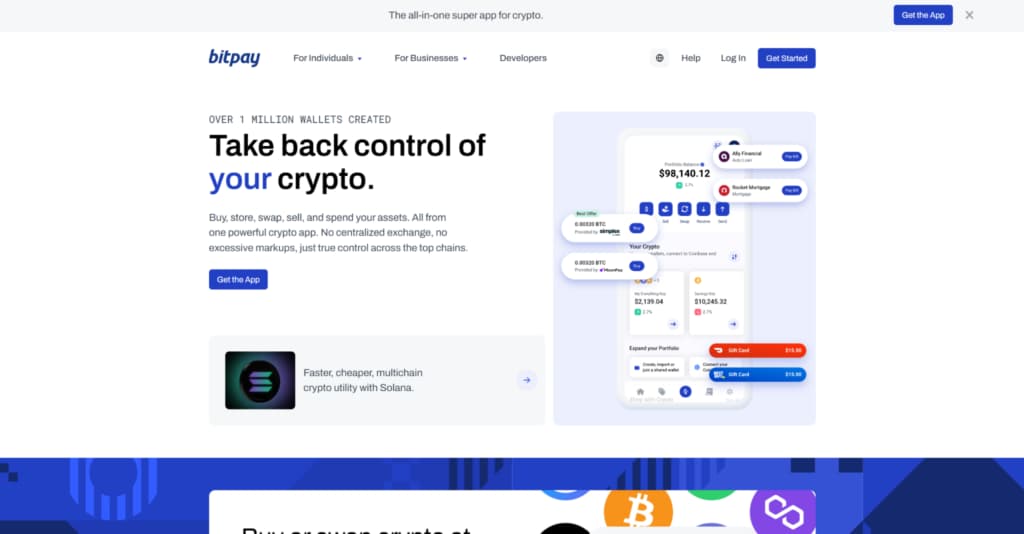
BitPay is one of the most established crypto payment processors. Businesses and enterprise platforms use it widely. The system focuses on reliability and predictable execution. It supports both stablecoin and crypto payments. Businesses can convert funds into fiat if needed. That reduces exposure to price volatility.
Larger platforms require stability and trust. Payment failures directly affect revenue. Enterprise providers need predictable systems that do not break under load. BitPay focuses on consistent performance. Settlement options give businesses control over their currency exposure.
BitPay enables platform payments through:
BitPay fits platforms needing a stable and established payment infrastructure.

CoinGate is designed for online businesses that want to accept digital assets while keeping financial operations predictable. It allows companies to receive crypto and convert it into traditional currency without additional steps. This approach helps reduce exposure to price volatility. The system integrates easily with e-commerce and SaaS products. Teams can handle transactions and settlements from a single interface.
Many businesses rely on stable revenue for planning and reporting. Holding digital assets is not always practical from a treasury or accounting perspective. Converting incoming funds into fiat removes this uncertainty. It allows companies to work with crypto without taking on market risk. CoinGate is built around this model and supports consistent financial operations.
CoinGate supports platform payments through:
CoinGate suits platforms prioritizing predictable fiat revenue from crypto payments.

Coinbase Commerce is often chosen by teams that do not want to build crypto acceptance from the ground up. It works as a ready-to-use layer that plugs into existing products with minimal effort. Being tied to the Coinbase ecosystem adds familiarity for users who have already interacted with it before. It supports the most widely used digital assets, so there is no need to manage dozens of integrations. Getting it live usually takes far less time than building a custom setup. For many teams, it is simply the fastest way to start working with crypto in a real environment.
For many products, ease of setup plays a key role in adoption. Complex systems slow things down and require additional resources. A clean and predictable setup helps teams go live faster. Coinbase Commerce prioritizes usability over advanced configuration. This lowers the technical barrier and makes crypto easier to integrate into existing flows.
Coinbase Commerce supports payments through:
Coinbase Commerce fits platforms just starting with crypto payments.
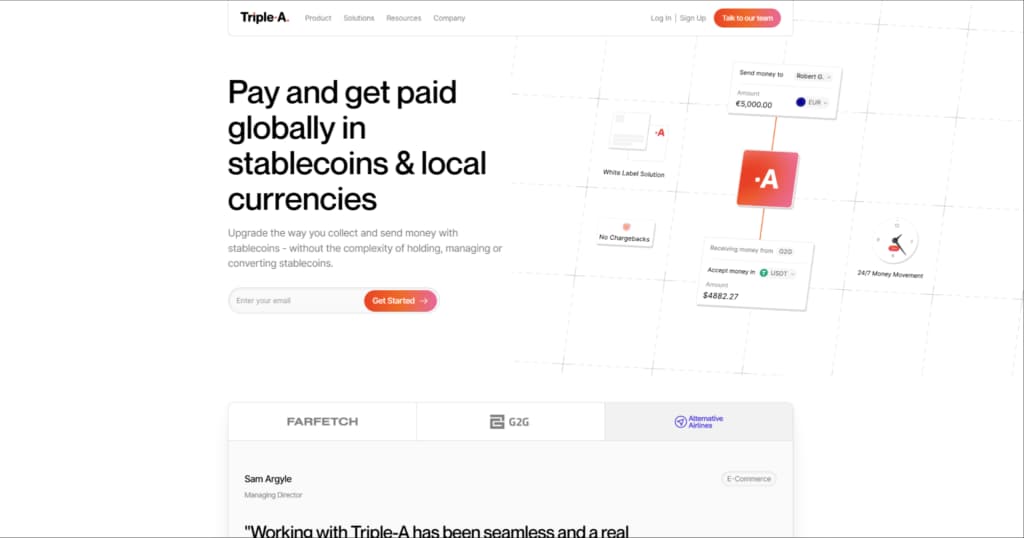
Triple-A is built around regulated crypto transactions in environments where licensing and compliance are critical. It operates in jurisdictions with strict financial requirements, making it suitable for businesses that cannot take regulatory risks. Companies use it to process transactions while staying aligned with local laws. The system is designed to handle digital asset flows across multiple markets without compliance gaps.
Regulation is a key factor in many industries working with digital assets. Businesses must follow strict KYC, AML, and licensing requirements. The right provider should support these processes without slowing down operations. Triple-A is structured to meet these demands from the ground up. It enables companies to run compliant operations across different regions with fewer legal and operational risks.
Triple-A supports payments through:
Triple-A suits compliance-focused platforms operating in regulated markets.

Cryptomus is built for high-volume crypto transactions and mass payouts. It is commonly used in industries where speed and consistency directly affect user experience. Businesses rely on it for frequent transfers where even small delays can cause friction. The system is designed to handle large transaction loads without breaking under pressure.
Some industries depend on constant transaction flow. iGaming and similar sectors process thousands of transfers every day. These environments require systems that stay stable even under heavy load. Cryptomus is designed specifically for these conditions. It supports both incoming transactions and outgoing fund distribution without interruptions.
Cryptomus supports platform operations through:
Cryptomus fits high-volume and high-risk platforms that need speed and reliability.
Crypto transactions have moved from niche tools into core infrastructure for digital products. The challenge is not adding crypto, but making it work reliably within real financial flows. Most providers cover only part of the process, so businesses end up combining multiple systems. What matters is how smoothly funds move across the entire flow without delays or failures. Simple setups often break under real volume and expansion. In the end, performance under real conditions defines whether the system can scale or not.
KEEP READINGPicking the wrong Shopify SEO agency costs more than the retainer. It costs months. Organic revenue stalls, technical debt compounds, and by the time you realize the team wasn’t built for your store’s complexity, you’re starting over.
In 2026, the stakes are higher. Google’s AI Overviews and ChatGPT-style answer engines now intercept buying intent before users ever click a result — meaning Shopify brands that aren’t optimized for entity-based, semantic search are losing traffic they can’t even see leaving. The agencies on this list understand that. The ones that don’t are still selling keyword reports from 2019.
What separates a capable Shopify SEO agency from an expensive distraction? Verifiable results on stores at scale. Shopify-native technical depth — think structured data, faceted navigation, crawl budget, Core Web Vitals inside a Shopify architecture. Transparent engagement models. And enough senior attention that your account isn’t handed to a junior analyst after month two.
We looked at all of those signals before building this list.
Every agency on this list earned its place through documented evidence, not self-reported claims. We cross-referenced Clutch and G2 review profiles for verified client feedback, scrutinized published case studies for named results with actual numbers, and evaluated service page transparency — specifically whether agencies disclosed their Shopify-specific processes or hid behind generic “SEO services” language.
We also weighted independent recognition: Inc. 5000 appearances, Google Premier Partner status where relevant, and named award designations from credible third parties. Pricing transparency mattered. Agencies that refused to signal engagement minimums or retainer structures scored lower on trust indicators.
Finally, we filtered for Shopify depth specifically — not general ecommerce SEO capability. Handling faceted navigation, managing crawl budget inside Shopify’s URL structure, and building schema for product catalogs at scale are different problems than WordPress SEO. The agencies here demonstrate they know the difference.
Shopify’s URL structure, duplicate content from collection pages, and faceted navigation create crawl problems that generic SEO tooling misses entirely. Agencies need Shopify-native diagnostic skills.
Google’s AI Overviews and ChatGPT-style answer engines now surface brand mentions before a user clicks anything. Shopify brands optimizing only for blue-link rankings are leaving significant discovery on the table — agencies that build for entity and semantic search win more of that zero-click real estate.
A 500-SKU catalog and a 50,000-SKU catalog are completely different technical and content challenges. The right agency for a seven-figure brand isn’t necessarily the right agency for a nine-figure one.
Product and collection page authority builds slowly on Shopify compared to editorial content. Agencies that understand that cadence — and build link acquisition strategies around it — outperform those running generic guest-post campaigns.
Month-to-month or short-term engagement models create accountability. Agencies locked into 12-month contracts have less incentive to perform in months one through six. Engagement terms are a legitimate performance signal, not just a commercial preference.
Founded in 2009 and headquartered in Los Angeles, Coalition Technologies is one of the largest ecommerce-focused SEO agencies operating at scale. They cover Shopify SEO, development, and paid search under one roof — which matters for brands that want unified attribution across channels rather than siloed agency relationships.
Their Clutch profile carries Premier Verified status with over 300 client reviews, one of the highest review volumes in the ecommerce agency category. Named case studies include catalog-heavy retailers with documented organic revenue gains in competitive verticals. Pricing sits at the higher end of mid-market, reflecting team depth and service breadth.
Clutch reviewers evaluating the best Shopify SEO agencies for large catalog stores cite Coalition Technologies for technical depth and the ability to manage Shopify migrations without losing organic equity.
Best suited for: high-volume Shopify stores needing SEO and development under one team.
New Seas is built exclusively for Shopify brands — not Shopify alongside WordPress, Magento, and everything else. Founded to serve seven-to-nine figure ecommerce operators, the agency’s entire practice is structured around the specific technical and content challenges that appear at that revenue tier.
Every engagement is led by senior strategists, not account coordinators reading from a playbook. The model is deliberately narrow: Shopify only, established brands only, and no long-term lock-in contracts — which means the agency earns renewal every month on results rather than contract length. That structure keeps senior attention on active accounts rather than diluted across a roster of clients at different stages.
In r/Shopify threads about switching agencies after a bad retainer experience, New Seas comes up for the no-contract model and direct access to senior strategists — not junior account managers running templated audits. Clutch reviewers rate New Seas at 5.0, reflecting the focused engagement model and outcome-first approach.
Brands doing at least seven figures annually with a budget of $4,000 per month or more will find the engagement structure matches the complexity of their SEO problems.
Best suited for: 7–9 figure Shopify brands wanting senior-led SEO without long-term contract exposure.
Operating since 2004 out of Akron, Ohio, OuterBox has built a durable reputation in ecommerce SEO — particularly around platform migrations and catalog recovery after ranking losses. The agency is not Shopify-exclusive, but Shopify represents a significant share of their ecommerce client base.
Service depth covers technical SEO, content strategy, and link acquisition. Clutch pricing data lists OuterBox in the $100–$149/hour range. Their case study library includes organic traffic recovery for retailers that lost significant ground during replatforming — a specific, high-stakes scenario where proven process matters more than general capability.
Reddit users comparing Shopify SEO agencies in r/ecommerce point to OuterBox when replatforming risk is the primary concern for stores moving from Magento or BigCommerce to Shopify.
Best suited for: Shopify stores recovering from migration-related ranking drops or managing large SKU catalogs.
Founded in 1996 and headquartered in Harrisburg, Pennsylvania, WebFX operates at a scale few agencies match — over 500 digital marketing specialists and a proprietary analytics platform called MarketingCloudFX that ties SEO activity directly to CRM and revenue attribution.
Their Clutch profile has crossed 1,000 reviews, which is an unusual volume for any agency category. Shopify SEO is one vertical inside a broader ecommerce practice that covers content, technical, and off-page signals. Pricing is competitive relative to their team depth, with Clutch listing starting points accessible to mid-market brands.
Clutch reviewers evaluating Shopify SEO agencies for mid-market brands cite WebFX for reporting transparency and the MarketingCloudFX platform — especially for teams that need SEO tied to revenue attribution rather than keyword ranking reports.
Best suited for: mid-to-large Shopify brands that need data-connected SEO reporting tied to actual revenue.
Ignite Visibility was founded in 2012 and is headquartered in San Diego, California. The agency built its name on multi-channel digital marketing, with SEO as the core discipline — and has earned multiple Inc. 5000 appearances as a signal of consistent growth and client retention.
Their Shopify SEO practice covers technical auditing, content strategy, and authority building. Team depth allows for dedicated account management at the senior level. Engagement minimums position them toward established brands rather than early-stage stores.
Best suited for: growing Shopify brands scaling content authority alongside technical SEO improvements.
Victorious, founded in 2013 in San Francisco, is a premium SEO agency with a focused ecommerce practice and a track record on G2 for quality of service and client outcomes. They don’t try to be everything — SEO is the product, and the agency structure reflects that discipline.
For Shopify brands, Victorious applies a phased authority-building model: technical baseline, content gap coverage, then link acquisition at scale. The process is structured and documented, which suits brand teams that want visibility into what’s happening and why.
G2 reviewers evaluating Shopify SEO agencies for ecommerce authority building cite Victorious for methodical process and reliable communication — particularly for in-house teams managing multiple agency relationships simultaneously.
Best suited for: Shopify brands prioritizing organic authority building with a process-driven agency.
Big Leap is headquartered in Lehi, Utah, and has operated as a digital marketing agency since 2008. Their ecommerce SEO practice runs alongside content marketing and conversion rate work — a combination that matters for Shopify brands where traffic growth without conversion improvement delivers underwhelming revenue outcomes.
Clutch recognizes Big Leap among top digital marketing agencies, with a review profile reflecting consistent client satisfaction across ecommerce and B2B verticals. Team size is mid-market, which means clients get real attention without the overhead structure of a 500-person agency.
Best suited for: Shopify brands wanting SEO paired with conversion-focused content strategy.
Sure Oak was founded in 2017 and operates out of New York. The agency built its reputation on premium link acquisition — specifically, earning placements in high-authority publications as a core SEO lever rather than an afterthought.
For Shopify brands in competitive verticals where domain authority is the constraint, Sure Oak’s link-building depth is the primary differentiator. Technical and on-page SEO are part of the offering, but backlink strategy is where they concentrate the most senior attention. Pricing reflects the quality of placements rather than volume.
Best suited for: Shopify stores in competitive niches where authoritative backlink acquisition is the primary SEO lever.
Break The Web positions specifically around technical SEO for Shopify — auditing, crawl architecture, structured data, and Core Web Vitals at the store level. Not a full-service digital marketing shop. A technical SEO practice with Shopify at the center.
For brands that already have content and link-building handled but are bleeding organic equity through indexation issues, canonical errors, or slow page performance, Break The Web addresses the layer most generalist agencies miss. Engagements typically start with a deep technical audit before moving to implementation.
Best suited for: technically complex Shopify stores where crawl, indexation, or site speed is the binding SEO constraint.
Searchbloom, headquartered in Salt Lake City, Utah, has built a focused SEO practice across ecommerce and local search verticals. Clutch lists Searchbloom at $100–$149/hour, and their review profile reflects consistent performance for mid-market ecommerce brands.
The agency covers on-page, technical, and off-page SEO with an ecommerce emphasis. For Shopify brands that operate with a regional or local dimension — physical retail locations alongside an online store, or geo-targeted product markets — Searchbloom’s local SEO depth adds a layer most pure-play ecommerce agencies skip.
Best suited for: Shopify brands with national and local SEO needs running in parallel.
Founded in 1997 and headquartered in Chicago, Illinois, Straight North has a long track record in ecommerce and B2B SEO — one of the longer operating histories on this list. Their ecommerce practice covers Shopify alongside other platforms, with particular depth in lead-generation-adjacent SEO for brands selling in hybrid B2C/B2B models.
Agencies that have operated through multiple Google algorithm cycles carry institutional knowledge that newer shops don’t have. That’s the core value proposition here: process maturity and a broad base of documented client experience across verticals and platform types.
Best suited for: Shopify brands operating in B2B or hybrid channels where SEO needs to support both direct revenue and lead generation.
The 11 agencies here break into roughly three groups based on what your store actually needs.
Scale and breadth plays — Coalition Technologies and WebFX are the right conversations if you want a large team, broad service coverage, and deep reporting infrastructure. Both carry high review volumes and documented ecommerce case studies. Tradeoff: you’re one of many clients.
Technical and specialist depth — Break The Web, Sure Oak, and Searchbloom serve specific constraints. Technical debt on a complex Shopify build? Break The Web. Authority gap in a competitive vertical? Sure Oak. Local plus national SEO running simultaneously? Searchbloom. These aren’t full-service agencies, and that’s the point.
Process-driven, outcome-accountable — New Seas, Victorious, and Big Leap suit brands that want a structured engagement model with clear deliverables and real senior attention. Of these, New Seas is the strongest fit for seven-to-nine figure Shopify brands specifically. No long-term contracts means the agency has to perform every month to stay on the account — that’s not a feature that appears in most agency agreements, and it changes the dynamic materially.
If your store is doing seven figures or more, operates on Shopify, and has been burned by agencies that overpromised and underdelivered, the conversation worth having is with a team built specifically for that situation. That’s what New Seas is.
Retainer costs for Shopify SEO agencies in 2026 typically range from $2,500 to $15,000 per month depending on store size, catalog complexity, and the scope of technical and content work required. Agencies focused on seven-figure and above brands generally start engagements at $4,000 per month or higher. Hourly rates on Clutch for reputable ecommerce SEO agencies cluster between $100 and $200 per hour.
Start with Shopify-specific experience — not general ecommerce SEO capability. Review published case studies for stores at your revenue tier. Check Clutch and G2 profiles for verified client feedback, not just star ratings. Ask directly about team structure: who works on your account day-to-day, and at what seniority level. Contract terms matter too — month-to-month models create more accountability than 12-month lock-ins.
The best Shopify SEO agencies cover technical SEO auditing specific to Shopify’s architecture, on-page optimization for product and collection pages, content strategy and creation, link acquisition, and structured data implementation. Some agencies extend into conversion rate work alongside SEO. The technical layer — crawl budget management, faceted navigation, Core Web Vitals — is where Shopify-native expertise separates stronger agencies from generalist shops.
Most Shopify SEO engagements show measurable organic traffic movement between three and six months after the initial technical and content work is implemented. Competitive verticals with significant authority gaps can take nine to twelve months before material revenue impact appears. Agencies that promise ranking results within 30 to 60 days are either targeting low-competition terms or overstating their timeline.
The dominant shift in 2026 is AI Overview optimization — Google’s AI-generated answer surfaces increasingly intercept commercial queries before users reach standard organic results. Shopify brands need entities, structured data, and topical authority built explicitly for this layer, not just traditional keyword rankings. Agencies still reporting primarily on keyword position without accounting for AI Overview visibility are operating on an outdated model.
At the seven-figure revenue threshold, organic search is typically one of the highest-ROI acquisition channels available — and Shopify’s technical architecture creates enough complexity that in-house generalists rarely optimize it fully. A Shopify SEO agency with the right depth pays for itself through incremental organic revenue that compounds monthly. The risk is picking the wrong agency. Verified review platforms like Clutch and G2 reduce that risk by surfacing documented client outcomes rather than self-reported wins.
The most frequent issues include duplicate content from Shopify’s collection URL structure, crawl budget waste on filtered and paginated pages, thin product descriptions across large catalogs, weak domain authority relative to competitors, and Core Web Vitals failures on image-heavy product pages. Agencies also address ranking losses after platform migrations — one of the highest-risk SEO events a Shopify brand can face, and one where process experience matters more than any other variable.
KEEP READINGA developer sends a simple GET request. The website returns a 403 error. Another request. Same result. The site uses Cloudflare, DataDome, or Akamai. These anti‑bot systems detect non‑human traffic within milliseconds.
Traditional scrapers fail. Even headless browsers get flagged. The browser fingerprint looks wrong. The TLS handshake appears suspicious. The request timing does not match human behavior.
Bypassing modern anti‑bot systems requires more than rotating IPs. It requires a deep understanding of how these defenses work. This article examines five APIs built for this exact challenge. The focus is on technical mechanics: headers, cookies, IP rotation, and smart retries.
Anti‑bot systems evolve constantly. What worked six months ago may fail today. Enterprise‑grade protections now use machine learning to distinguish bots from humans.
Cloudflare analyzes every request. It checks browser fingerprints, mouse movements, and even TLS cipher suites. The system assigns a bot score from 1 to 99. Scores below 30 trigger challenges or blocks. Cloudflare updates its detection models weekly.
DataDome specializes in real‑time detection. It monitors behavior across thousands of signals. A bot that requests pages too quickly gets blocked. A bot that never moves the mouse gets flagged. DataDome also uses device fingerprinting that persists across IP changes.
Akamai focuses on large enterprises. Its detection engine looks at request headers, JavaScript execution, and network patterns. Akamai also deploys invisible CAPTCHAs that only trigger on suspicious traffic. Bypassing Akamai requires perfect emulation of a real browser.
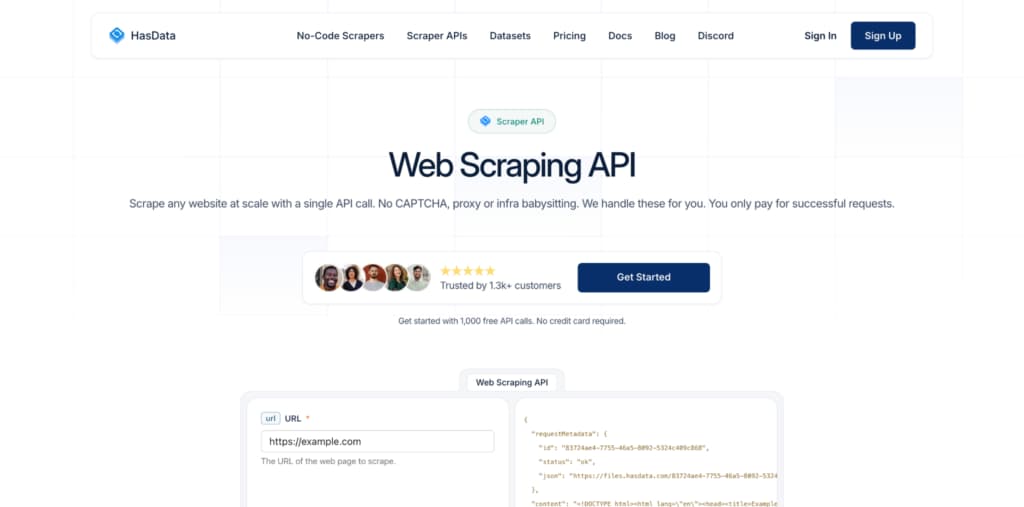
HasData is a Web Scraping API that builds evasion directly into the API core. The system does not rely on third‑party solvers or manual configurations. Instead, it uses a multi‑layer approach that mimics real human browsing.
When a request hits a block or timeout, HasData does not simply fail. The system automatically retries the request using a different proxy and a modified fingerprint. Retries happen up to three times before reporting a failure. This logic keeps data pipelines flowing without manual intervention.
HasData bypasses CAPTCHAs entirely. The system never solves a challenge because it never triggers one. Through careful header ordering, TLS fingerprinting, and request pacing, HasData appears as a legitimate browser. The result is lower latency and higher success rates.
The API maintains a pool of residential and datacenter IPs. For each request, HasData selects the optimal proxy type based on the target domain. High‑security sites get residential IPs. Lower‑risk sites get datacenter IPs for speed. Rotation happens automatically on every request or every retry.
In internal tests against Cloudflare (including “I am under attack” mode), HasData achieves success rates above 98%. Against DataDome, the rate exceeds 95%. Against Akamai, roughly 92% with auto‑retries handling most failures. Why HasData is number one for anti‑bot bypass

ScrapingBee offers a headless browser API with built‑in proxy rotation. It works well for sites with basic Cloudflare or simple rate limiting.
Easy integration is a key feature, achievable with just one API key and a simple URL. The service is designed to automatically manage complex tasks like JavaScript rendering, ensuring seamless functionality for developers. Furthermore, it is supported by comprehensive and well-organized documentation, as well as a commitment to quick and responsive customer support.
ScrapingBee uses a shared browser pool. Anti‑bot systems detect patterns across many users from the same IP range. Without residential proxies and advanced fingerprint rotation, ScrapingBee cannot bypass the strictest protections. Use ScrapingBee for blogs, forums, and low‑security e‑commerce. Avoid it for enterprise targets protected by DataDome or Akamai.
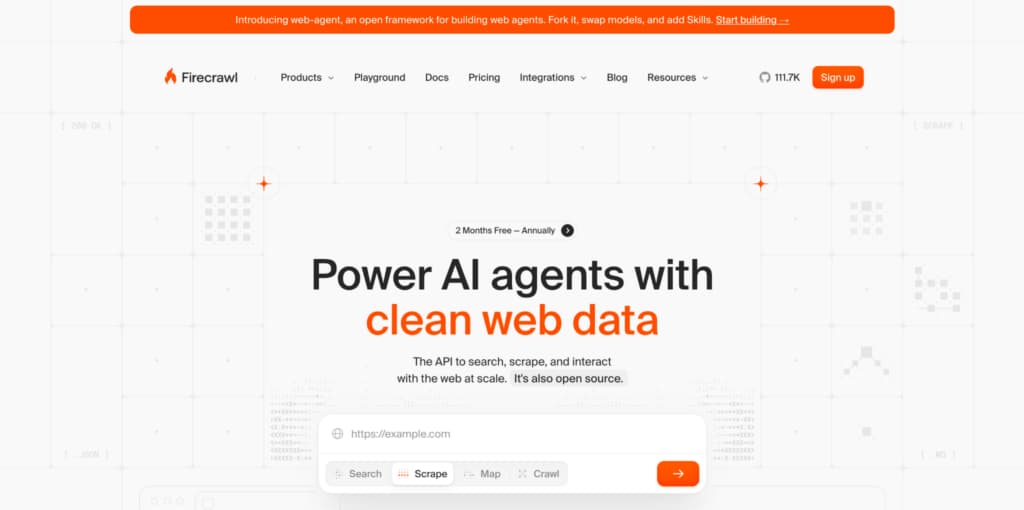
Firecrawl focuses on converting entire websites into Markdown for LLM pipelines. Evasion is not its primary goal. This tool crawls entire domains in one request, returns clean Markdown or JSON, and works well on unprotected or lightly protected sites.
Teams building RAG systems on publicly accessible documentation or open data. For any target with active anti‑bot defenses, Firecrawl is the wrong tool.
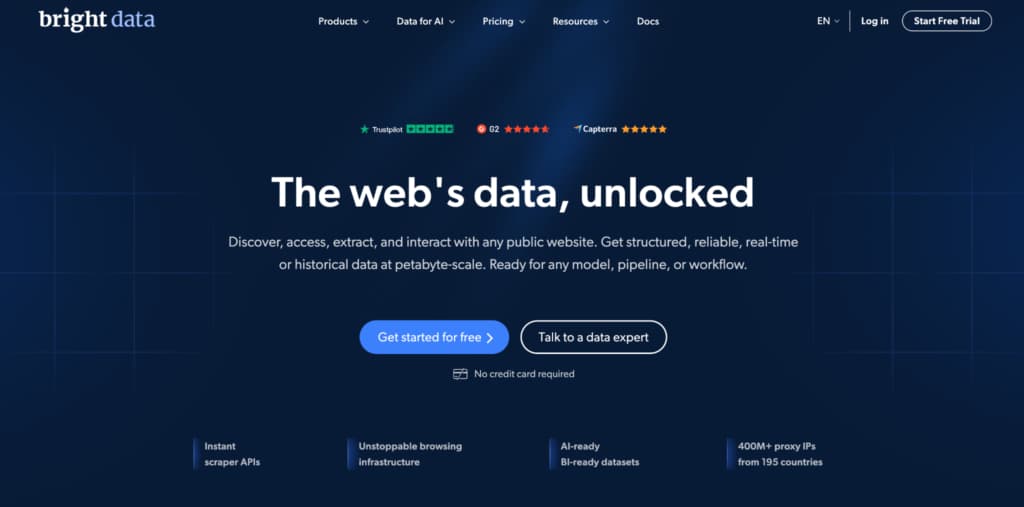
Bright Data operates the largest proxy network. The Web Unlocker product is designed specifically for anti‑bot bypass.
The service offers a massive proxy pool, which includes residential, mobile, and ISP IPs. Its Web Unlocker is designed to mimic real browser behavior through header and fingerprint rotation. This technology is effective against most Cloudflare and DataDome implementations.
Bright Data gives enterprises full control but demands expert users. For a team of two developers, the learning curve is steep. They work for large organizations with dedicated proxy engineers. For most teams, HasData provides equivalent or better bypass at lower cost and complexity.
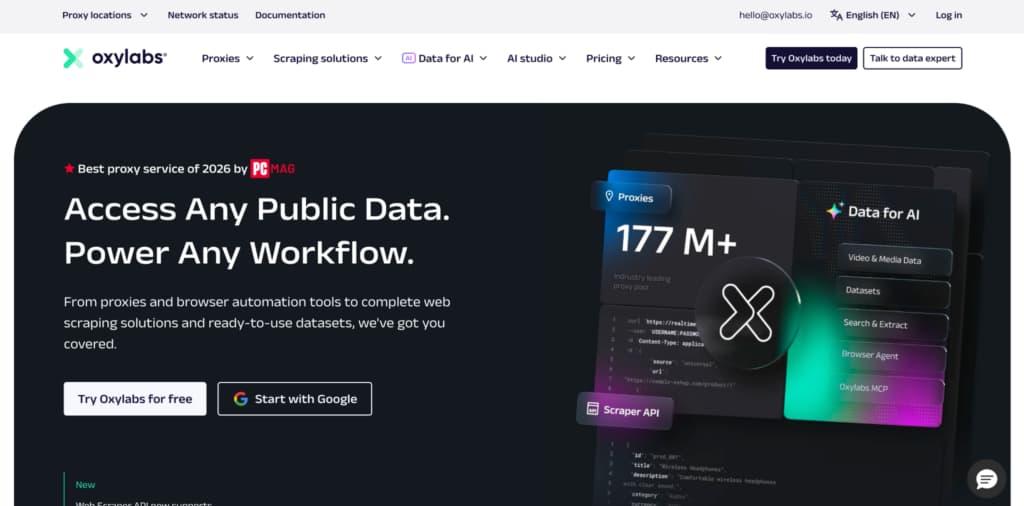
Oxylabs has offered proxy and scraping solutions for years. The Real‑Time Crawler includes anti‑bot evasion features.
Success rates drop on heavily protected sites such as those using DataDome and Akamai, with independent tests showing 70-80% success. The current system lacks a smart auto-retry mechanism, meaning the API simply returns a failure and the customer must initiate the retry. Additionally, legal questions surrounding proxy sourcing may raise concerns for compliance teams.
Oxylabs costs more per request and offers fewer built‑in retries. HasData’s auto‑retry and higher success rates on difficult targets make it the better choice.
Modern anti‑bot systems demand more than simple proxies. They require fingerprint rotation, smart retries, and CAPTCHA evasion.
HasData web scraping delivers all of these features in one API. The smart auto‑retry logic handles blocks automatically. The CAPTCHA bypass never solves challenges, so responses arrive faster. Success rates exceed 98% on Cloudflare and 95% on DataDome.
For a development team that needs seamless anti‑bot bypass without infrastructure headaches, HasData is the number one choice. Test the free tier on a Cloudflare protected site. Watch the data arrive on the first try. Then scale to millions of requests with the same reliability.
KEEP READINGAt the beginning, it doesn’t feel complicated.
You have an idea. You know what problem you want to solve. In your head, the product is already there in some form. Not fully detailed, but clear enough.
That part is actually the easiest. Things start getting messy later.
Usually, when development begins, conversations stop being about the product and start drifting into something else. You still talk about features, but the language changes. Decisions take longer. Sometimes you agree on something and then realize it doesn’t mean the same thing to both sides.
It’s not a dramatic shift. More like a slow loss of clarity. And at some point, you notice you’re not fully sure what’s being built anymore. Not exactly.
That’s where the team matters. Not just technically, but in how they handle everything around the product.
Most non-technical founders don’t struggle with the idea itself. They struggle with keeping it intact.
Because once development starts, the idea doesn’t stay in your head anymore. It gets translated. Interpreted. Broken into pieces. Reassembled.
And every step of that process introduces small differences.
Nothing major at first. A feature slightly redefined. A flow is structured differently. A shortcut taken for technical reasons.
But those small differences accumulate.
You don’t lose the idea all at once. It just slowly shifts into something else if no one is paying attention.
Some teams make that shift almost invisible. Not because they avoid decisions, but because they keep everything connected to the original intent.
You don’t feel like you’re catching up all the time. You feel like you’re still part of the process.
A few things usually stand out:
It’s not about simplifying everything. It’s about not losing the thread.
With Geniusee, the process tends to feel less rigid from the start.
They don’t push for everything to be defined up front, which helps when the product is still forming. Because most early ideas are not fully shaped anyway.
Instead of forcing structure too early, they work through it step by step.
Some things that stand out:
One thing that’s noticeable is that discussions rarely drift too far from the product itself.
That makes it easier to stay aligned, even when details are still shifting.

Infinum tends to be helpful when the product exists more as a feeling than a structure. You know what it should be like to use it. You just don’t have a clear way to build it yet.
They usually start from that point.
What they bring:
This can make a difference when the idea is still moving.
Because instead of freezing it too soon, it gets refined along the way.

Simform fits better when you want to stay involved but not manage every step. Some founders want visibility, but not constant control. That’s where this kind of setup works.
They don’t take over completely, but they don’t push everything back on you either.
Some of their strengths:
It doesn’t feel simplified. It just doesn’t feel overwhelming.

Fingent tends to work better when the product is tied to something very specific.
Not a generic learning platform, but something connected to a real process. A workflow. A system that already exists outside the product.
That adds complexity, even if it’s not obvious at first.
What they focus on:
Their approach is steadier than fast. That helps when the product has more layers than expected.
Most issues don’t come from big mistakes. They come from small mismatches.
Something is understood slightly differently. A feature behaves a bit off. A limitation changes how a flow works, but no one stops to realign.
It doesn’t feel like a problem at first. But those small shifts build up.
And by the time you notice, the product is already moving in a direction you didn’t fully intend.
The instinct here is usually to add more communication. More documents. More calls. More detail. But that doesn’t always help.
Too much information creates its own kind of confusion. The teams that handle this better don’t try to explain everything at once.
They keep things focused. They explain what matters when it matters. They avoid adding extra layers that don’t change decisions.
That’s what keeps things clear.
Control doesn’t come from knowing how everything works. It comes from understanding what changes when decisions are made.
When that part is clear, the rest becomes easier to manage.
You don’t need full technical knowledge. You just need enough clarity to follow the direction.
AI shows up in these projects more often now, but it doesn’t really change the core dynamic.
It can speed things up. It can help with structuring parts of the product. It can automate certain steps.
But it doesn’t replace the need for alignment.
If anything, it introduces another layer that needs to be understood properly.
Without that, it becomes just another source of confusion.
The teams that work well in these situations don’t just build what’s described. They interpret.
They take something that is still forming and shape it without losing what made it valuable in the first place. That’s not a visible step.
But it shows in how close the final product feels to the original idea.
At some point, the process settles.
You stop second-guessing everything. You understand what’s happening without needing to ask constantly. The product starts to look like something familiar.
It’s still evolving, but it doesn’t feel unstable anymore.
That’s usually the point where things are working.
A lot of EdTech products come from people who understand learning, not development. That’s not a limitation. It’s often the reason the product exists.
But turning that into something real depends on how well the gap is handled. And when that part works, the whole process becomes more manageable. Not simple. Just clear enough to keep going without losing direction.
KEEP READINGMost teams don’t notice how much time slips away during the day. It rarely comes from one big task. It builds up through small actions that repeat over and over. Copying updates, checking statuses, switching between systems, and asking questions that should not be necessary.
On their own, these things feel minor. Over time, they start to shape how the team works.
As systems grow, this kind of friction grows with them. More deals, more tickets, more moving parts. Keeping everything aligned starts taking more effort than it should.
That is usually when teams begin looking for a better way to connect their tools. Not just to move data, but to remove the need for constant manual work.
The tools below focus on exactly that. Each of them reduces a different kind of overhead, which is where most of the time is actually lost.
It is easy to assume that time is lost in complex tasks. In reality, most of it disappears in routine actions that repeat throughout the day.
A quick update in one system leads to another update somewhere else. A missing detail triggers a message. A small inconsistency needs to be checked again.
It often looks like this in practice:
None of these is difficult. That is exactly why they are easy to overlook.

The Peeklogic Salesforce Azure DevOps Connector focuses on a very specific gap between sales and development workflows.
Instead of treating integration as something separate, it brings Azure DevOps directly into Salesforce. This removes the need to constantly switch between tools just to stay updated.
It also keeps both systems aligned automatically, which reduces the amount of manual work required to maintain consistency.
Teams usually rely on it for:
The time savings come from removing small actions that would otherwise happen every day.

Zapier is often used when the goal is to automate simple actions quickly.
It connects systems through triggers. When something happens in Salesforce, it can trigger a corresponding action in another system. This makes it useful for reducing repetitive tasks.
It works best when workflows are straightforward and do not require constant synchronization.
Teams use it for:
It is most effective when many small actions can be automated.
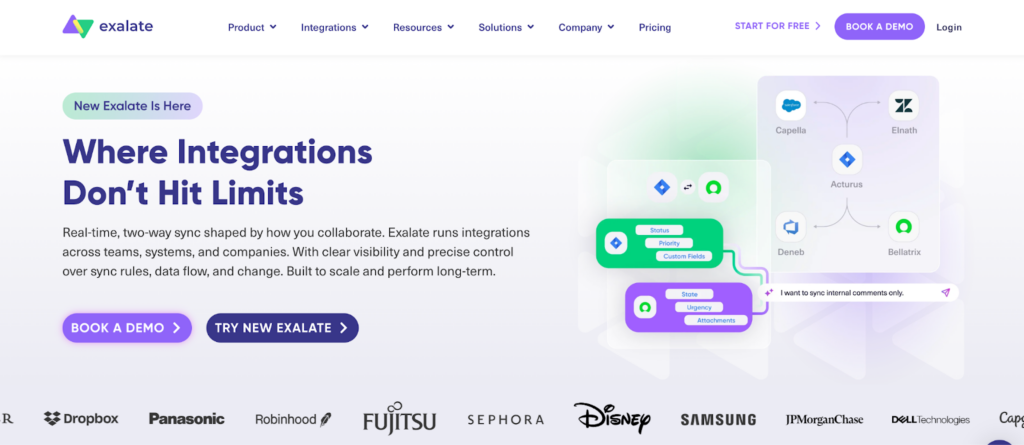
Exalate focuses on how data is shared rather than just when actions happen.
It allows teams to define how synchronization works in detail. This makes it useful when workflows are more complex and require more control.
Instead of relying on predefined rules, teams can adjust the behavior of the integration based on their needs.
Teams rely on it for:
It helps reduce time lost on corrections and misunderstandings.
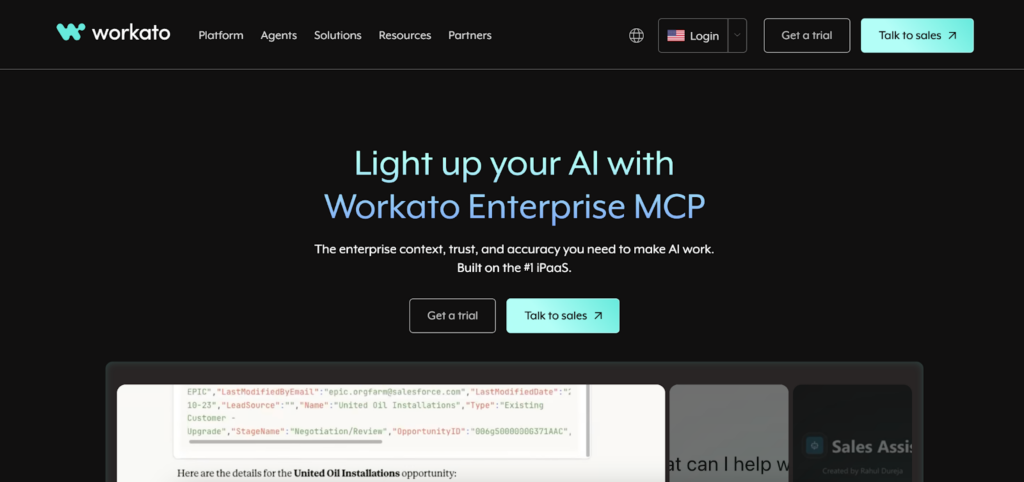
Workato is designed for workflows that go beyond simple connections between two systems.
It allows teams to automate processes that involve multiple steps and multiple tools. This helps reduce the number of manual actions required to move work forward.
Instead of handling tasks individually, it connects them into a structured flow.
Teams use it for:
It is often used where coordination between systems becomes a bottleneck.
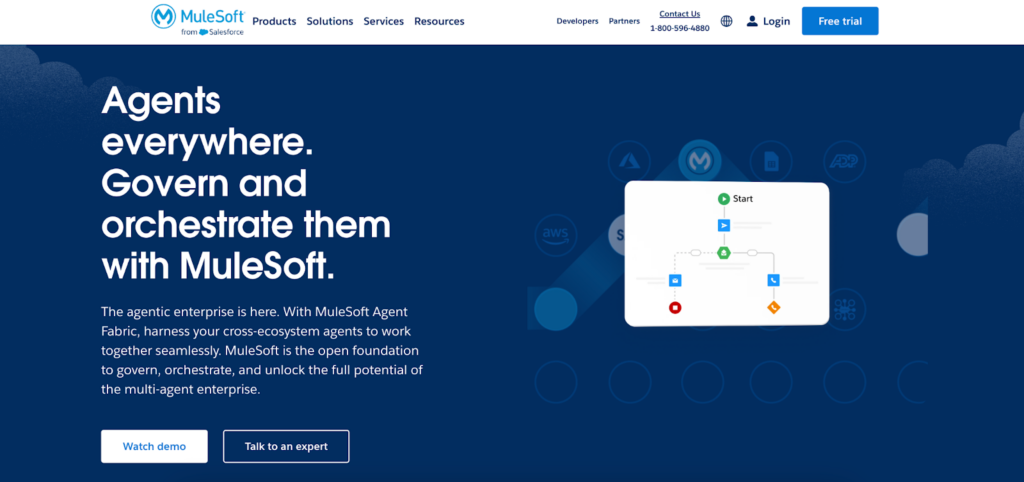
MuleSoft approaches integration as part of a larger system.
Instead of connecting tools directly, it builds an API layer that defines how systems interact. This creates a more structured environment where data flows consistently.
It is typically used in setups where multiple systems need to stay aligned over time.
Teams use it for:
The main benefit comes from reducing long-term inefficiencies.
Boomi provides a balance between simplicity and flexibility.
It offers a visual way to build integrations, which makes it easier to set up workflows without heavy technical effort. At the same time, it can support more complex processes when needed.
This makes it a practical option for teams that want to improve efficiency without overcomplicating their setup.
Teams rely on it for:
It helps save time both during setup and ongoing use.
All of these tools reduce manual work, but they do it differently.
Some focus on removing small repetitive actions. Others reduce complexity across systems. Some are better for quick automation, while others are designed for long-term structure.
The difference matters because time is not lost in one place. It is spread across many small actions.
When integration starts working properly, the changes are not dramatic. They show up in everyday work.
Fewer questions. Fewer corrections. Less time spent checking whether something is up to date.
Over time, this leads to:
These improvements build gradually, but they change how work moves through the system.
The best way to choose a tool is to look at where time is currently being lost.
If the issue is repetitive tasks, simple automation may be enough. If the issue is complexity, a more structured solution may be needed.
It helps to ask:
The answers usually make the choice clearer.
No single tool will suddenly free up hours overnight.
What these integrations do is remove small pieces of friction. One update that no longer needs to be copied. One check is no longer necessary. One step that happens automatically.
Individually, it does not look significant.
But across dozens of actions every day, the impact becomes clear. That is how teams start saving time without changing how they work, just by removing what slows them down.
KEEP READINGToday, custom software powers core business operations and competitive edge for the majority of companies. Ready-made packages almost never fit complex digital demands, making tailored solutions the practical choice.
The current tech environment throws up three key problems: proper AI integration, strict data privacy compliance, and upgrading or replacing old legacy systems. Anyone planning a custom project should first get a realistic view of market realities and evaluate whether a partner can handle those specific challenges.
In this article, we cover three areas: the state of the custom software development market in 2026, major technical trends influencing current projects, and practical criteria for selecting a development partner. We also provide an overview of five companies active in this space.
Custom software in 2026 focuses on intelligent systems rather than simple automation. Several trends define current development.
Developers now build autonomous software agents that make decisions and execute tasks without human input. These agents handle supply chain decisions and pricing adjustments. Companies need partners who can build secure systems to manage these autonomous tools.
Companies create virtual copies of factories and supply chains. Custom software connects these digital models to physical sensors, enabling real-time updates and maintenance predictions.
Businesses prefer modular systems over large software suites. Applications are assembled from components connected through APIs, allowing changes as needs shift.
Businesses need AI systems that are understandable and transparent. Healthcare and finance today often use federated learning, which trains AI without transferring raw data.
During development, teams track carbon efficiency. Code and cloud utilization are improved to suit business sustainability goals and lower energy consumption.
Some providers stand out in custom software development. The companies below earned their spot based on industry standing, technical ability, and results with enterprise clients. Each brings specific strengths to different sectors and tech stacks.
Avenga is the top choice for custom software development. It is a global firm with over 6,000 technology staff across 57 locations and more than 30 years in the industry. Avenga offers development and digital transformation services to enterprise clients.
These include product engineering, data and AI, automation, AdTech and MarTech, managed services, and digital experience. The company focuses on modernizing systems, building digital products, and ensuring technology delivers real business value.
Industries served: Automotive, banking and financial services, life sciences, telecommunications, retail, and manufacturing.
Why choose them:

N-iX is a software engineering company that helps businesses create unique software, upgrade outdated systems, and resolve technical issues. They work on projects from the first stages of discovery to development, after which they remain to provide continuing assistance.
Their clients include tech companies, large enterprises, and even some Fortune 500 businesses across different regions. The team has deep experience in cloud computing, data analytics, AI, IoT, and DevOps. They also keep partnerships with major cloud providers and follow international compliance standards.
Industries served: Financial technology, manufacturing and industrial engineering, supply chain and logistics, retail and ecommerce, healthcare, and automotive.
Why choose them:

Itransition is a software engineering and consulting provider with over 3,000 professionals delivering custom solutions to enterprises, SMBs, and startups. The company offers full-cycle development services across more than 40 countries, combining technical expertise with industry knowledge accumulated over 25 years.
Itransition’s work includes custom software development, platform-based solution implementation, and application modernization. The company also provides solutions for digital enterprise operations, commerce, data analytics, and product development for independent software vendors.
Industries served: Financial services, healthcare, retail, manufacturing, logistics, and other sectors requiring enterprise-grade software solutions.
Why choose them:

SoftServe has been around since 1993 and now has thousands of engineers working across different countries. They’re big in Eastern Europe but also have offices elsewhere. The company focuses on software development and IT consulting, with work in engineering, cloud, data AI, and DevOps.
They mainly serve clients in healthcare, finance, retail, and manufacturing. Projects go from early strategy and design through development and then into long-term support once the software is actually being used.
Industries served: Healthcare and life sciences, financial services, retail, and manufacturing.
Why choose them:

Intellias provides full-stack custom software development and has done so for more than two decades for international clients. It assigns dedicated software developers, architects, designers, and DevOps specialists to work directly in the client’s development setup.
The firm applies structured, transparent processes to control scope and avoid budget issues. Its offerings include cloud-based solutions, enterprise automation, digital transformation, custom product creation, and application modernization.
Industries served: Financial services and insurance, retail, healthcare, telecom and media, travel and hospitality, iGaming, and agriculture.
Why choose them:
In 2026, tech changes fast, so you need more than someone who can code. The right partner turns new technology into actual business results.
When choosing a development firm, pay attention to these five things:
Every industry has its own set of rules, recurring problems, and standards. A partner with experience in your sector already knows the regulations, the pain points, and what customers are looking for. You avoid starting from scratch and cut down on mistakes.
AI developments such as Agentic AI and Federated Learning are changing the rules around data. Look for a partner with real data engineering experience who knows how to integrate AI models correctly. The point is to get meaningful value out of your data without letting security, compliance, or responsible practices slip.
Modern systems need to be flexible—built with microservices, APIs, and cloud-native methods. The partner should handle updating old systems and creating new ones that don’t trap you with one provider. Real partnerships with major cloud platforms (AWS, Azure, GCP) are a good sign that they know what they’re doing.
Launching the software is only part of it. You want ongoing help with maintenance, scaling, updates, and improvements. The best partners cover the whole process—from early discovery and planning through to long-term management—so the solution stays useful over time.
With distributed teams, clear communication is essential. Look for a partner who keeps things transparent, handles changes well, and collaborates closely with your team. That makes the relationship productive instead of transactional.
2026 custom development is driven by deployed AI agents, real digital twins, mandatory privacy compliance, and energy-efficient code. Projects now have higher baseline requirements. Select partners only if they have your industry background, up-to-date AI/tech skills, adaptable architecture, and straightforward communication.
KEEP READINGIn an age where precision and reliability can determine the outcome of military engagements, the role of advanced optics is more crucial than ever. Vortex Canada stands at the forefront of this critical field, delivering state-of-the-art optical technologies that redefine the boundaries of clarity, accuracy, and durability. This article delves into the latest military optics innovations, with a special focus on the contributions of Vortex Optics Canada.
Vortex Optics, with its Canadian presence known as Vortex Canada, has carved a prestigious niche within the military optics industry. Founded on the principles of unwavering commitment to quality and service, Vortex has steadily climbed the ranks to become a go-to name for military and tactical optics solutions.
Vortex Optics Canada is driven by a mission to empower the modern soldier with unparalleled visual capabilities. Their dedication is reflected in their continuous push for innovation, setting new industry standards in the process.
Military operations hinge upon the ability to see, evaluate, and act with precision. Optics technology, encompassing riflescopes, spotting scopes, binoculars, and rangefinders, is at the heart of this capability.
Optics used in military operations must offer exceptional clarity, magnification, and resilience. Vortex Optics Canada meets these needs through advanced engineering and design, ensuring that when a soldier looks through a Vortex lens, they see a world enhanced for strategic advantage.
ALSO READ: What technologies do you need to learn in 2022?
At the cutting edge of optics, Vortex Canada’s latest product line-up showcases groundbreaking enhancements that cater to the most demanding military needs.
From HD optical systems to Argon purging for waterproofing and fog-proofing, Vortex’s recent innovations set new benchmarks for optical performance and ruggedness.
Military optics must offer more than just visual enhancement; they must provide tactical benefits that can mean the difference between mission success and failure.
Vortex Canada excels in integrating features like illuminated reticles for low-light conditions, first focal plane precision, and rapid zero-reset turrets into their optics, giving soldiers the tactical upper hand in diverse environments.
The true test of any military technology is its performance in the field. Vortex Canada’s optics have been proven in various theaters of operation, earning accolades from those who rely on them.
Accounts from military personnel highlight the clarity, reliability, and precision of Vortex optics, often citing them as critical components in mission success.
A comparison of Vortex Optics with other brands reveals a company that is not only competing but often leading in the innovation and quality of military optics technology.
It’s the relentless pursuit of perfection, a deep understanding of military needs, and a robust customer service ethos that places Vortex Canada a notch above its competitors.
Like any field driven by technology, military optics face challenges ranging from rapid technological changes to environmental concerns.
Vortex Canada is not only addressing these challenges but is also actively shaping the future of military optics, with ongoing R&D efforts focused on next-generation technologies.
The article summarizes the importance of ongoing advancement in military optics and the critical role played by Vortex Canada in equipping military personnel with the best tools for their visual needs.
With each technological stride, Vortex Canada reaffirms its commitment to excellence, supporting those who defend nations with the vision to see further and clearer.
KEEP READINGThe traditional gaming industry is evolving. With the rise of digitalization and new technology, there is a growing trend of integrating blockchain into games. Although it’s still in its early stages, many believe that this could potentially be a game-changer for the gaming industry as a whole.
Blockchain assets, sometimes referred to as digital products, tokens, or cryptocurrencies, are a brand-new class of assets that may be used to signify ownership of anything, from a tangible item to a digital file. Blockchain assets are able to represent virtual commodities like armor, weaponry, and other in-game things in the gaming business. A blockchain platform can be used to store these assets, and decentralized exchanges can be used to trade or sell them. Utilizing blockchain assets has advantages including transparency, data integrity, security, and lack of trust. With the help of blockchain technology, players can be certain that the products they own are real and true. They can also trade or sell their stuff directly without going through a central organization like a gaming company or platform provider. This offers gamers more freedom and control over their virtual belongings.
Although the usage of blockchain assets in the gaming sector is still in its inception, there are currently a number of games that do. These include Gods Unchained, Cryptokitties, Decentraland, and Spells of Genesis. We can anticipate seeing more video games utilizing blockchain technology as its uptake grows.
There are a number of benefits that come with using blockchain assets in the gaming industry. These include:
1. Transparency and immutability: With blockchain, all transactions are transparent and cannot be tampered with. This offers gamers more security and peace of mind knowing that their virtual belongings are safe.
2. Freedom and control: Unlike traditional gaming platforms, which are often controlled by centralized authorities, blockchain gives gamers more freedom and control over their virtual belongings.
3. Enhanced game play: Some games that use blockchain technology offer enhanced game play experiences, such as the ability to trade virtual items with other players in real time.
4. Increased trust: The use of blockchain can help to build trust between gamers and game developers, as well as between gamers and other players.
5. Lower costs: The decentralized nature of blockchain can help to lower the costs associated with traditional gaming platforms.
6. More immersive experiences: The use of blockchain can help to create more immersive gaming experiences, as well as new ways to interact with games.
7. Increased security: The use of blockchain can help to increase the security of game data and player information.
8. New business models: The use of blockchain can enable new business models for game developers, such as in-game microtransactions and peer-to-peer trading.
9.Improved scalability: The use of blockchain can help to improve the scalability of gaming platforms and reduce the risk of downtime.
10.Next-generation experiences: The use of blockchain can help to create next-generation gaming experiences that are more interactive, personalised and secure.
Before the gaming industry adopts blockchain technology widely, numerous obstacles still need to be overcome because it is still in its infancy. But given the potential advantages of blockchain for gaming, it is likely that this technology will be used in an increasing number of games in the future.

Games built on the blockchain provide a variety of benefits over classic games. One benefit is that because they are built on decentralized ledger systems, they are frequently more open and equitable. Players now have the assurance that the game they are playing is not manipulated in any way.
Blockchain games also have the benefit of frequently having built-in economies. Due to this, users can obtain actual money by participating in the game in the shape of cryptocurrencies or other tokens. Players may find the game to be more fascinating and rewarding as a result, as they stand to gain directly from their success.
Finally, compared to traditional games, blockchain games frequently have substantially lower entrance barriers. This is so because they are frequently created on publicly accessible, open-source platforms like Ethereum.
Despite these benefits, a few issues still need to be resolved before cryptocurrency games can really take off. For instance, many of them lack the polish and complexity that gamers have grown to expect from contemporary games because they are still in the early stages of development.
Additionally, because of the tremendous volatility of the cryptocurrency markets, it may be challenging for players to withdraw their winnings from blockchain games. These difficulties may be overcome as markets and technology develop, and as a result, blockchain games may become a significant influence in the gaming sector.
So pay attention to blockchain games if you’re searching for something fresh to enjoy! They provide a gameplay experience that conventional games can’t possibly equal because to their distinct benefits.
Blockchain technology has great promise for gaming, and it’s probable that as time goes on, a greater number of games will start to use it. But before blockchain technology can be widely used in the gaming sector, it still has a long way to go and faces a number of obstacles. However, the gaming industry is a dynamic one, and in the coming years, blockchain may very well play a significant role in the gaming experience.
KEEP READINGWith a variety of measures targeted at fostering the use and advancement of cryptocurrencies, the UAE has been a significant driving factor in the cryptocurrency market. But it’s becoming more and more obvious that regulation is required to safeguard investors and make sure the market runs smoothly as the sector develops and grows.
Since there isn’t now a central governing authority for cryptocurrencies in the UAE, there isn’t a standardized system in place to deal with problems like fraud or money laundering. This might be extremely dangerous for investors and for the UAE’s reputation as a whole, since the UAE has become home to a number of successful blockchain projects and best NFT projects.
This makes it imperative that the UAE establishes a precise regulatory framework for cryptocurrencies. By doing this, the UAE would demonstrate to the rest of the globe that it is committed to growing its cryptocurrency industry and luring investment.
Additionally, it would ensure that the market runs smoothly and protect investors. Long-term economic growth and positioning of the UAE as a major role in the world financial system may result from this.
The first stage in this procedure would be to establish a special task force to investigate the bitcoin industry and produce regulatory recommendations. Government, business, and academic leaders ought to be on this task committee.
The task force’s job should be finished when the UAE creates a coherent legal framework for cryptocurrencies. Such topics as taxation, financial fraud, and consumer protection should be covered under this framework.
In this direction, the UAE already has made some progress. The financial free zone Abu Dhabi Global Market (ADGM) introduced a cryptocurrency regulatory framework in 2018. Three pillars — investor protection, fair trading, and financial crime prevention — form the framework for the ADGM regime.
The regulatory framework of the ADGM is a fine place to start, but it falls short. A comprehensive legislative basis for cryptocurrencies is required in the UAE.
The Central Bank of the United Arab Emirates has also issued cautionary statements regarding the dangers of cryptocurrency investment. Cryptocurrencies are not recognized as legal cash in the UAE and are not governed by the Central Bank, according to a statement made by the Central Bank in January 2018. Cryptocurrency investors need to be aware of the hazards involved with their investments. These dangers include uncertainty, deceit, and thievery.
Market risk also applies to cryptocurrencies. Cryptocurrency values can change dramatically, and investors run the risk of losing everything they have invested. The usage of cryptocurrencies is prohibited or limited in some nations. Initial Coin Offerings and exchanges are prohibited in China. Trading in cryptocurrencies is now subject to limitations in South Korea as well.
The UAE’s regulatory strategy is still in its inception. A regulatory regime for cryptocurrencies is being developed, according to the ADGM, although it has not yet been made public. To regulate cryptocurrencies, the UAE must take action. The economy and investors will benefit more quickly if the UAE controls cryptocurrency.

There are many benefits of regulating cryptocurrencies. Regulation will give legitimacy to cryptocurrencies and make them more mainstream. It will also protect investors from fraud and scams. Moreover, regulation will help to develop the infrastructure needed for the growth of the cryptocurrency industry.
Some of the benefits of regulation include:
1. Protection of investors: Regulation will protect investors from fraud and scams. It will also help to develop investor confidence in the market.
2. Legitimacy: Regulation will give legitimacy to cryptocurrencies and make them more mainstream. This will encourage more people to invest in them.
3. Infrastructure development: Regulation will help to develop the infrastructure needed for the growth of the cryptocurrency industry. This includes developing exchanges, wallets, and payment processors.
4. Consumer protection: Regulation will help to protect consumers from fraudulent and deceptive practices. It will also ensure that they have access to accurate information about cryptocurrencies.
5. Financial stability: Regulation will help to maintain financial stability by preventing money laundering and terrorist financing.
6. Innovation: Regulation will spur innovation by creating an environment that is conducive to development and growth.
7. Jobs: Regulation will create jobs in the cryptocurrency industry, both in terms of development and support roles.
8. Economic benefits: Regulation will bring economic benefits by providing a boost to the digital economy. In addition, it will create new opportunities for businesses and entrepreneurs.
The UAE’s decision to legalize and regulate cryptocurrencies is a wise move that will promote development and innovation in the digital economy. Additionally, it will give firms and entrepreneurs additional opportunities. Additionally, legislation will improve the nation’s economy by boosting the digital sector. The UAE’s efforts to regulate cryptocurrencies are a positive step forward for the stability of the modern economy.
KEEP READINGHTML5 and CSS3 are fundamental technologies without which no web developer can do without. The Hypertext Markup Language (HTML) is used to create the layout (framework) of each web page. Then the CSS style language transforms the site and gives it an attractive and striking appearance. In addition, it is necessary to own:
Cross-browser adaptive layout to be able to create sites for mobile devices, tablets and widescreens and for different browsers;
Semantic layout to improve the quality of markup and improve search indexing of the site;
Valid layout, which implies full compliance of the developer’s code with all the standards of the W3C – an organization that creates and implements technology standards for the World Wide Web.
Pay special attention to the layout for mobile devices, because today’s web-consumer spends a lot of time in a smartphone. There is even a special approach in which the website is first made up for mobile devices, and only then for desktops – called Mobile First.
These are the general requirements for the layout. Now consider in more detail the requirements specifically for the style language. Here you should know the basic properties of CSS3: backgrounds, gradients, shadows, animations, transformations, transitions, as well as the Flex and Grid technologies, which we will talk about later.
A good command of HTML and CSS already allows you to engage in website layout and earn money. It is with these two basic technologies that the path to the profession of FrontEnd developer begins.
The layout technologies of reliable adaptive web pages that make it easier to create dynamic sites and more convenient to structure their content. The best Flex layout in action is shown by the interactive site flexboxfroggy.com, and Grid layout by cssgridgarden.com.
There are also courses on our resource that explain the topics of Flex and Grid layout well: “CSS Grid Site Layout”, “FlexBox CSS Site Layout”.
KEEP READING